Relationships
Are You Building a Case Against Your Partner?
October 20, 2026

How a strategy that once protected us can become an obstacle to the relationships we want.
Recently, I attended a Narcotics Anonymous meeting where a speaker described his early recovery. He didn't feel like he belonged, didn't understand what was happening, and found himself "building a case against Narcotics Anonymous."
That phrase stayed with me.
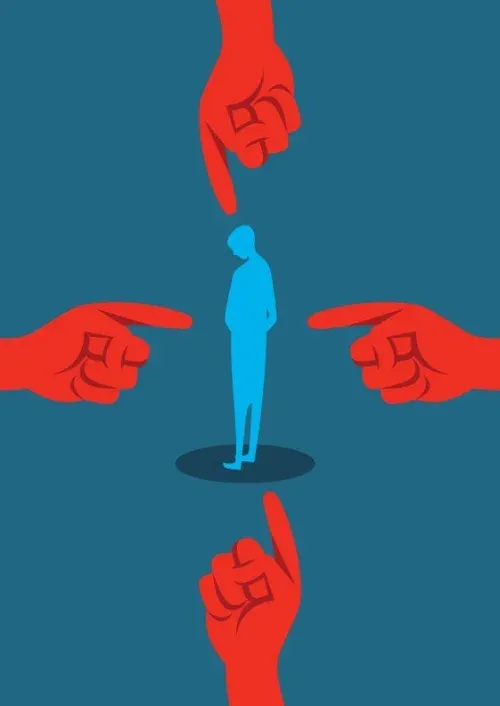
As a marriage and family therapist, I've seen something similar in intimate relationships. People collect evidence that their partners are selfish, inconsiderate, disrespectful, or untrustworthy. Every disagreement becomes another exhibit; every disappointment confirms an existing belief.
Sometimes they're right. But being right about a partner's shortcomings doesn't necessarily help build the relationship we want.
When Building a Case Becomes a Survival Strategy
Some of us may learn this strategy in childhood.
Our earliest relationships don't always provide the safety, understanding, or affection we need. As children, we may lack the power or skills to change them. We cannot always negotiate, set boundaries, or leave.
But we can develop explanations:
"My father doesn't care about me."
"My mother never listens."
"Nobody understands me."
These explanations can make painful experiences easier to understand and protect our self-esteem. Believing someone is treating us unfairly may feel less damaging than believing something is fundamentally wrong with us.
Building a case can help us survive a relationship we cannot change. The difficulty comes when we carry that strategy into adulthood.
We may now be able to communicate, negotiate, set boundaries, seek help, or make different choices. Yet when disappointed, we may still collect evidence, assign blame, and prove our case.
A strategy that once helped us endure a relationship may now prevent us from improving one.
The Emotional Rewards of Being Right
Building a case can be satisfying. Once we decide our partner is inconsiderate, we notice every inconsiderate act and remember every forgotten promise, dismissive comment, and disappointment.
This is confirmation bias: seeking and interpreting information to support what we already believe.
Each new example brings a moment of vindication: "See? I knew it!"
But there's a catch.
We can become increasingly successful at proving that our relationship is bad while becoming less successful at making it better.
Being right can feel more rewarding than the difficult work of understanding, negotiating, and changing our behavior.
When Resentment Becomes a Habit
When building a case becomes our response to emotional discomfort, hurt or rejection leads us to review everything our partner has done wrong. We recall past disappointments and rehearse arguments.
Uncertainty gives way to conviction; vulnerability gives way to righteous anger. We feel better briefly, but the underlying problem remains. We become more resentful and defensive, less willing to consider our partner's perspective, and ready to repeat the process after the next disappointment.
Building a case can become a mood-altering, habit-forming pattern that harms relationships, though it is not a clinically recognized addiction. The key question is whether we keep going even when we recognize the consequences.
The Gap Between Our Intentions and Our Actions
Much of my work focuses on the Intention–Action Gap: the distance between what we want and what we consistently do.
Most people entering couples therapy want to feel loved, respected, understood, and appreciated. Yet their strategies may undermine those goals:
They want understanding but repeatedly criticize.
They want closeness but maintain emotional distance.
They want trust but constantly search for evidence that their partner is untrustworthy.
Their intentions may be sincere; their strategies may simply be ineffective. Often, those strategies are deeply learned habits that once served an important purpose.
Bridging the gap requires recognizing what we're doing, assessing whether it works, and developing different responses. That involves self-monitoring, emotional regulation, cognitive flexibility, and interrupting habitual reactions.
It also requires accepting that we may contribute to the difficulties we want to resolve.
This does not mean accepting responsibility for another person's mistreatment. Sometimes our concerns are justified, and protecting ourselves requires boundaries or leaving an unsafe relationship.
Even then, we can choose what to do with what we observe.
From Proving a Case to Improving a Relationship
The next time you mentally review everything your partner has done wrong, ask:
Am I trying to understand what's happening, or prove what I've already decided?
What am I getting emotionally from building this case?
Is this strategy helping me accomplish what I want?
What actions are within my control?
Perhaps the most important question is:
"Suppose I'm absolutely right about my partner. What do I want to do with that information?"
Being right may clarify a problem, but it doesn't solve it. We still must decide whether to communicate differently, set boundaries, seek help, change our expectations, or make other decisions about the relationship.
Our early experiences may explain our strategies, but they do not have to determine how we live.
Sometimes meaningful change begins when we stop asking how to prove our case and start asking how to build the life and relationships we want.
 GC
Gerald B. Chambers, LMFT #100367
Licensed Marriage and Family Therapist specializing in addiction, domestic violence, and relationships. Serving California clients online.
About Gerald →